
Publishing blog posts, social media updates, and videos without a clear direction can waste time and resources. A content strategy helps you decide what to create, who it is for, where to publish it, and how to measure its impact.
Whether you’re a beginner, a small business owner, or a marketer, creating a content strategy gives your content a clear purpose instead of relying on random ideas.
In this guide, you’ll learn how to create a content strategy step by step, research relevant topics, plan content across channels, and measure results. You’ll also find a practical example and a simple framework you can adapt to your business.
What Is a Content Strategy?
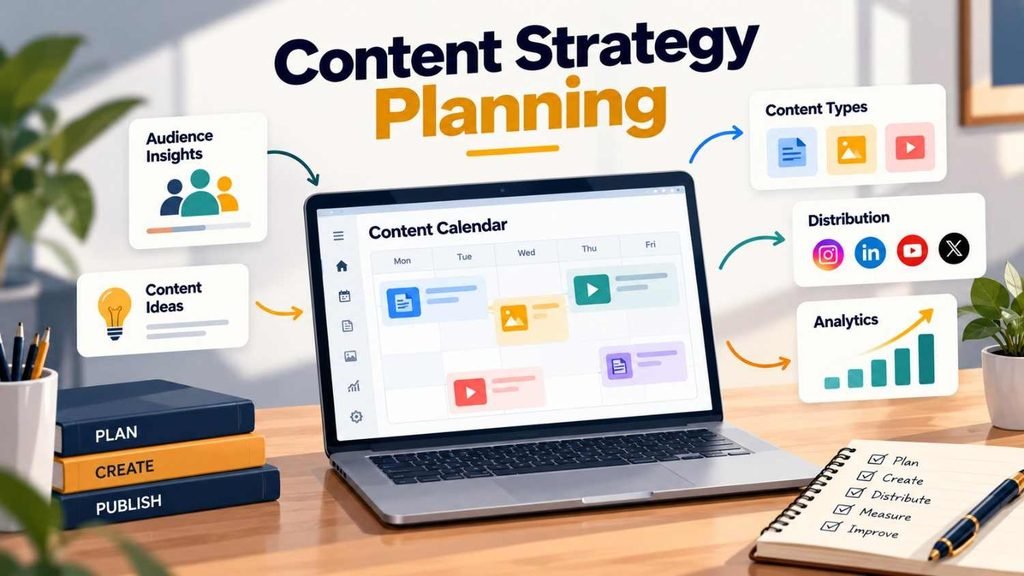
A content strategy is a structured approach to planning, creating, managing, distributing, and evaluating content to meet audience needs and business goals.
It defines the purpose of your content, the people you want to reach, the topics you will cover, the formats you will use, and how you will determine whether your efforts are working.
For example, a digital marketing agency might publish educational blog posts to attract organic traffic, share short videos to explain marketing concepts, and use email newsletters to maintain contact with its audience. Each format serves a purpose while supporting a shared objective.
Content Strategy vs. Content Plan
These terms are related, but they are not interchangeable.
- Content strategy: Defines why you create content, whom you serve, and how content supports your goals.
- Content plan: Outlines the topics, formats, channels, responsibilities, and deadlines needed to execute the strategy.
- Content calendar: Organizes planned content by publishing date and tracks its production status.
You need a strategy before building a detailed content calendar. Otherwise, you risk publishing consistently without knowing whether your content reaches the right audience or contributes to meaningful outcomes.
If you’re new to the broader marketing landscape, What Is Digital Marketing? 10 Types, How It Works, and Key Features explains how content fits alongside other marketing channels.
Why Do You Need a Content Strategy?
A documented content strategy helps you make better decisions about where to invest your time and resources.
Its main benefits include:
- Clear direction: Every content asset has a defined purpose.
- Better audience relevance: Topics are based on audience needs rather than assumptions alone.
- More efficient production: Planning reduces last-minute content creation and duplicated effort.
- Consistent brand messaging: Your content communicates a coherent message across channels.
- Measurable performance: You can compare results against specific goals and improve your approach.
A strong content strategy starts with the audience, not just search rankings. Focus on creating content that genuinely answers readers’ questions and helps them achieve their goals. Google’s guidance on creating helpful, reliable, people-first content explains how this approach aligns with its content quality principles.
How to Create a Content Strategy in 7 Steps
1. Define Your Content Goals
Start by identifying what your business needs content to accomplish. Without a clear objective, it becomes difficult to decide which topics deserve priority or which results matter.
Common content goals include increasing organic traffic, building brand awareness, generating qualified leads, educating customers, and supporting customer retention.
Choose one primary goal initially, then identify supporting goals if necessary.
For example, a new digital marketing blog might aim to increase relevant organic traffic over six months. It could track organic clicks, impressions, and the number of pages attracting qualified visitors.
Make your goals specific and measurable. Instead of saying, “We want better content performance,” define the result you want, the metric you will track, and the period in which you will evaluate progress.
2. Understand Your Target Audience
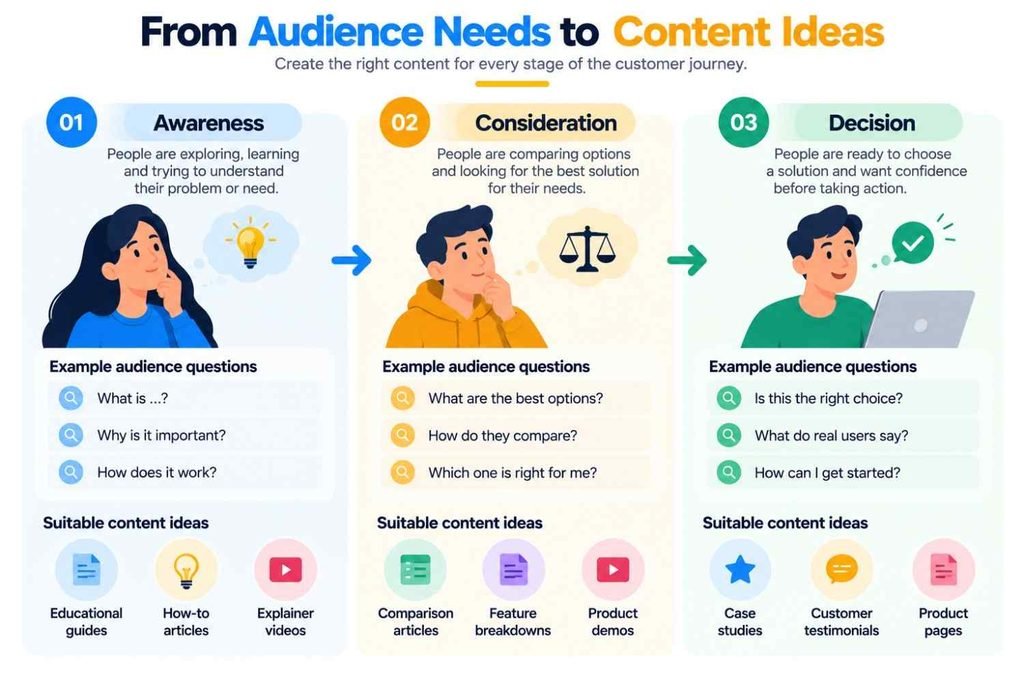
Your content should address the questions, challenges, and decisions of a clearly defined audience.
Start by examining what your existing customers ask, which problems your product or service solves, and what information people need before making a decision.
Useful research sources include customer interviews, sales conversations, support questions, Google Search Console, search suggestions, and relevant online communities.
Create a simple audience profile covering:
- Their main goals and challenges.
- The questions they regularly ask.
- Their knowledge level.
- The information they need before taking action.
- The channels and formats they prefer.
For example, beginners learning digital marketing may need simple explanations and step-by-step tutorials. Experienced marketers may prefer technical analysis, advanced workflows, and detailed case studies.
The more accurately you understand your audience, the easier it becomes to choose topics and formats that genuinely help them.
3. Research Keywords and Choose Content Topics
Keyword research helps you understand what people search for and how they describe their problems. It should inform your content strategy without becoming the only source of ideas.
Start with a broad topic related to your business. Find relevant search terms, related questions, and specific subtopics. Then evaluate each opportunity using search intent, estimated search volume, keyword difficulty, business relevance, and your ability to produce a useful answer.
Prioritize keywords with meaningful demand and manageable competition for your website. A lower-difficulty keyword can be a sensible opportunity for a newer website, but relevance and search intent still matter.
For example, a digital marketing website could research topics around keyword research, content planning, and campaign measurement. It could then organize related terms into topic clusters, with one comprehensive guide supported by narrower articles that answer specific questions.
For a practical walkthrough of paid-search keyword research, read How to Use Google AdWords for Keyword Research . It explains how to discover keyword ideas and evaluate relevant search metrics using Google Keyword Planner.
4. Establish Content Pillars and a Distinctive Angle
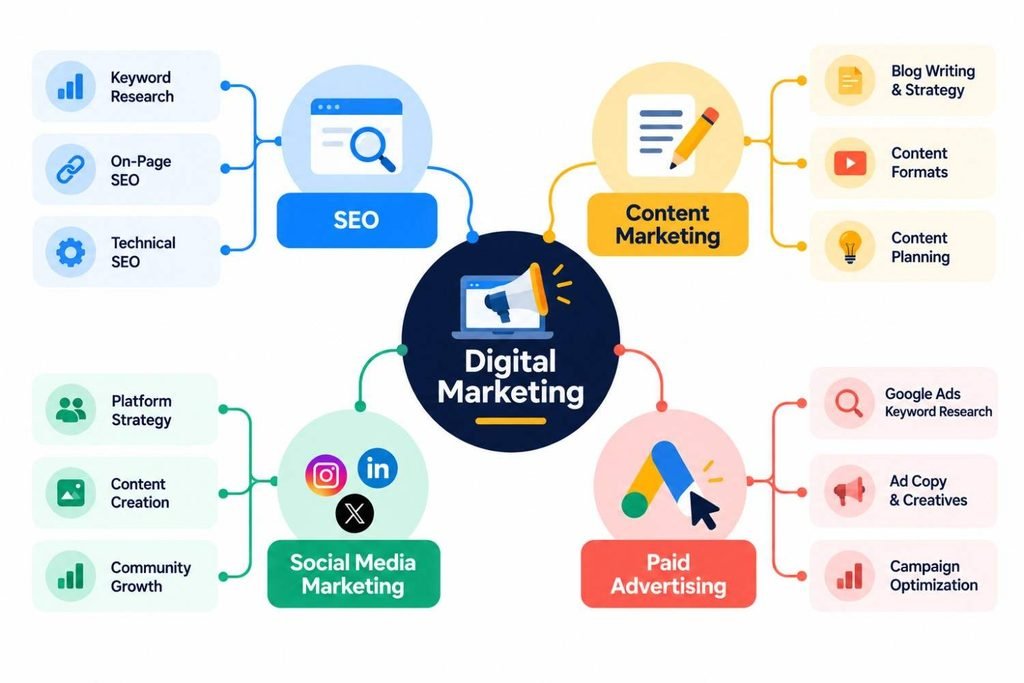
Content pillars are the main subject areas your brand consistently covers. They help you maintain focus, build related resources, and avoid publishing disconnected pieces.
A digital marketing website might choose these pillars:
- SEO and organic visibility.
- Content marketing and strategy.
- Social media marketing.
- Paid advertising and analytics.
Choose pillars that overlap with your audience’s needs and your brand’s expertise. Four focused pillars are often easier to manage than a long list of unrelated categories.
Next, define what makes your approach useful or different. You might explain complex concepts in simple language, provide practical examples, compare tools objectively, or share original research.
A topic cluster should offer a connected learning experience rather than several articles repeating the same information.
5. Choose Content Formats and Distribution Channels
Not every topic needs to become a blog post. Choose a format based on the question, the complexity of the subject, your audience’s preferences, and your available resources.
- Blog articles: Useful for detailed explanations, tutorials, and searchable resources.
- Short-form videos: Suitable for quick demonstrations, summaries, and visual explanations.
- Infographics: Helpful when simplifying processes, comparisons, or frameworks.
- Email newsletters: Useful for nurturing subscribers and distributing selected resources.
- Case studies: Effective for demonstrating how a solution works in a real situation.
Choose distribution channels based on where your audience looks for information and how each channel supports your goal.
A business using SEO to attract organic traffic might publish detailed blog guides, repurpose key insights into social media posts, and share new resources through an email newsletter.
The purpose of repurposing is to adapt an idea to the needs of each channel, not simply copy and paste the same content everywhere.
Content can also support audience relationships beyond the first visit. For ideas on using email as a marketing channel, explore What Is Email Marketing and What Are Its Advantages? How It Works.
6. Build a Realistic Content Plan and Calendar
Once you have defined your goals, audience, topics, and channels, turn the strategy into an actionable plan.
Your plan should specify what you will create, who is responsible, where it will be published, and when it needs to be completed.
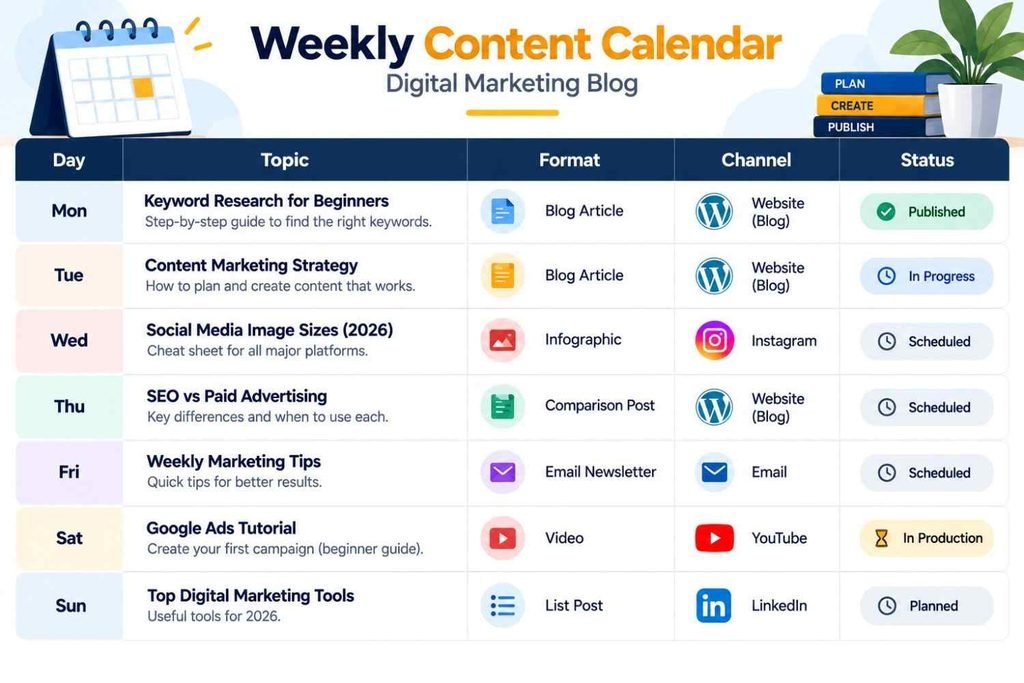
A basic content calendar can include:
- Working title and target keyword.
- Content format and primary channel.
- Target audience and intended goal.
- Assigned writer or creator.
- Draft and publication dates.
- Status and published URL.
Set a publishing frequency your team can maintain. Publishing two useful articles each month is more sustainable than planning daily articles that you cannot research, produce, or update properly.
7. Measure Performance and Improve Your Strategy
Publishing content is not the final step. Review performance regularly to understand what is working, what needs improvement, and where new opportunities exist.
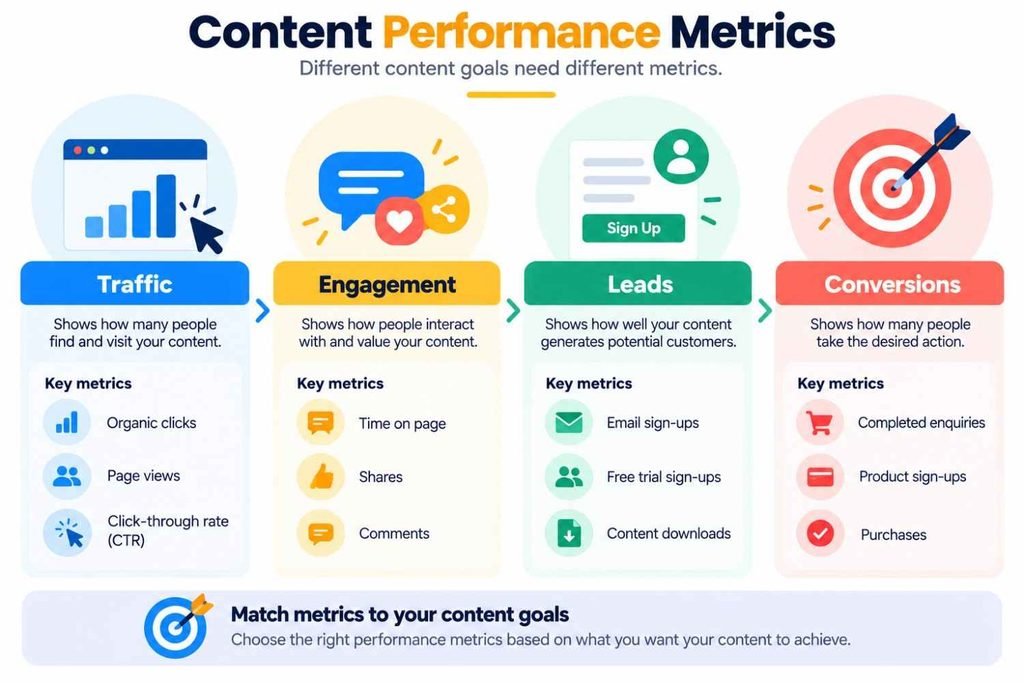
Choose metrics that reflect your goals.
For organic search, track clicks, impressions, rankings, and relevant landing-page performance through Google Search Console and analytics tools.
For social media, examine reach, meaningful engagement, saves, shares, and referral traffic where relevant.
For lead generation, measure qualified leads, conversion rate, and the contribution of content to the customer journey.
Do not judge every content asset by the same metric. An educational article may be successful at attracting relevant traffic, while a product comparison page may be more valuable for helping visitors make decisions.
Use the results to update underperforming content, expand successful topic clusters, improve distribution, and reconsider topics that no longer support your goals.
Content Strategy Example for a Digital Marketing Blog
Imagine a digital marketing blog that wants to attract beginners and help them learn practical marketing skills.
Its strategy could focus on four connected pillars: SEO, content marketing, social media marketing, and paid advertising.
The primary goal would be to increase relevant organic traffic and build a returning audience.
The blog could publish a comprehensive SEO guide, followed by supporting articles on keyword research, content planning, and search performance measurement. It could use short social posts to explain key lessons and an email newsletter to distribute new tutorials.
Every article would have a defined search intent, a target audience, and a useful next step for readers.
The team would review search visibility, relevant traffic, newsletter sign-ups, and engagement regularly. Based on those findings, it could improve existing articles or prioritize new topics.
This example demonstrates the central principle of a content strategy: each piece of content has an individual purpose while contributing to a broader plan.
Simple Content Strategy Template
Use this checklist to document your strategy before building your calendar.
- Business goal: What outcome should content support?
- Target audience: Who are you trying to help?
- Audience needs: Which questions and challenges matter most?
- Content pillars: Which core topics fit your expertise?
- Keyword opportunities: Which relevant search terms have realistic potential?
- Formats and channels: Where will you publish, and in what form?
- Publishing workflow: Who creates, reviews, and publishes each asset?
- Measurement: Which metrics will indicate progress?
- Review schedule: When will you evaluate and update the strategy?
Keep the document practical. A short strategy that guides daily decisions is more useful than a detailed document that nobody refers to.
Frequently Asked Questions
How do beginners create a content strategy?
Start with one business goal and a clearly defined audience. Research their questions, select a few relevant content pillars, choose appropriate formats and channels, build a realistic publishing plan, and measure results regularly.
What should a content strategy include?
A content strategy should define its goals, target audience, key topics, distinctive value, content formats, distribution channels, production process, and performance measures.
What is the difference between a content strategy and a content calendar?
A content strategy defines the purpose and direction of your content. A content calendar schedules individual content pieces and tracks when they will be produced and published.
How often should you review a content strategy?
Review performance monthly or quarterly, depending on your publishing frequency and business needs. Update the strategy when audience needs, business priorities, channel performance, or market conditions change significantly.
Final Thoughts
Learning how to create a content strategy starts with understanding your audience and defining what your content should achieve. From there, research relevant topics, establish content pillars, choose suitable formats, build a realistic publishing plan, and measure results.
You do not need a complicated framework to begin. Start with a focused strategy, execute it consistently, and improve it using evidence from your audience and performance data.
At Wolfiedigi, the objective is to make digital marketing easier to understand through practical, useful guidance that helps readers make better decisions.